
Vienna is one of the few cities that is genuinely worth a visit in every season, and that's not just a figure of speech. Each season transforms the city in its own way: gardens in bloom in spring, open-air culture in summer, golden light in fall and Christmas market magic in winter. So the question isn't whether to go, but when Vienna suits you best.
Vienna in Spring (March – May)
The Weather
Spring in Vienna gets off to a hesitant start. March can still be bitterly cold (5–10 °C), but from mid-April temperatures rise noticeably. May is often the loveliest spring month: a pleasant 15–22 °C, plenty of sunshine and the city in full bloom. That said, spring is also the rainiest season, so an umbrella definitely belongs in your luggage.
What Makes Vienna Special in Spring
Spring is the season when Vienna literally blossoms. The city's gardens and parks come back to life, and there's hardly anything nicer than strolling through them in the warm light.
The best spring moments:
The Volksgarten next to the Hofburg, the former imperial palace, is a dream in May: more than 3,000 rose bushes begin to bloom and turn the park into a fragrant sea of flowers. The gardens of Schönbrunn Palace show off their fresh green, and the University of Vienna's Botanical Garden is a quiet insider tip for plant lovers.
Vienna's coffee houses open their Schanigärten (outdoor seating): the terraces and sidewalk tables that are as much a part of the Viennese way of life as the foam is to a Melange (Vienna's milky coffee, similar to a cappuccino). Finally sitting outside again, soaking up the sun and people-watching: that's Vienna in spring.
Spring events:
Easter Market in front of Schönbrunn Palace (March/April): crafts, painted eggs and Easter concerts against a Baroque backdrop
Easter Market at Am Hof and Freyung: traditional markets in the city center, less touristy than Schönbrunn
Genussfestival in the Stadtpark (May): Austrian producers present regional specialties
Wiener Festwochen (May/June): Vienna's biggest cultural festival, with theater, music and performance from around the world
Long Night of Museums (May): more than 100 museums stay open until 01:00 with free admission on a single ticket
Our tip: April and May are the perfect months for combining sightseeing with time outdoors. The summer crowds haven't arrived yet, the lines are shorter and hotel prices are often lower than in high season.
Vienna in Summer (June – August)
The Weather
Viennese summers can get surprisingly hot. Temperatures of 30–35 °C are not unusual in July and August, and the city heats up noticeably. Afternoon thunderstorms are common, but they bring quick relief. In the evening it cools down to a pleasant 18–22 °C, perfect for long summer nights.
What Makes Vienna Special in Summer
In summer, Vienna turns into one huge open-air stage. The city moves its life outdoors: to the Danube Canal, onto Danube Island, into the parks and up to its many rooftop terraces.
The best summer moments:
The Danube Canal becomes a summer promenade with pop-up bars, beach volleyball courts and graffiti galleries. On hot days the whole city heads to Danube Island and the Alte Donau (Old Danube). With beach pools, sailboats and stand-up paddleboarding, Vienna feels almost like a resort town on the water.
If you want to escape the daytime heat, take refuge in the cool halls of the museums. The Albertina, the Kunsthistorisches Museum (Museum of Fine Arts) and the MuseumsQuartier offer pleasant temperatures and world-class art.
The evenings belong to open-air events: in the courtyard of the MuseumsQuartier, hundreds of people lounge on the colorful Enzis (lounge furniture), along the Danube Canal the city grills and chats, and on Rathausplatz, the square in front of City Hall (Rathaus), the Film Festival flickers on the big screen: operas, concerts and ballet with free admission, plus food stands from around the world.
Summer events:
Donauinselfest (June): Europe's largest open-air festival, three days of music on more than 10 stages, completely free
Film Festival on Rathausplatz (July/August): music and film under the open sky with free admission
Jazz Fest Wien (June/July): international jazz stars at the Vienna State Opera and other venues
ImPulsTanz (July/August): international dance festival with performances and workshops
Summer Night Concert Schönbrunn (June): the Vienna Philharmonic plays for free in the palace gardens
Our tip: Be sure to pack your swimwear. Vienna has plenty of outdoor pools, swimming ships on the Danube Canal and natural places to swim. Gänsehäufel on the Alte Donau is the city's most popular beach pool. On the hottest days, it's best to tick off the sights in the morning and head to the water in the afternoon.
Vienna in Fall (September – November)
The Weather
Fall in Vienna starts golden and ends gray. September is often still summery and warm (18–25 °C) and is considered one of the most pleasant months of all to travel. October brings autumn leaves, mild temperatures (10–16 °C) and that famous crisp fall air. November then gets cooler and foggier as the city slips into winter.
What Makes Vienna Special in Fall
Fall is Vienna's most elegant season. The parks turn golden, the cultural scene kicks off its new season and the grape harvest in Vienna's vineyards is in full swing.
The best fall moments:
Few images are as typically Viennese as the tree-lined avenues in fall in the palace park of Schönbrunn or in Pötzleinsdorfer Schlosspark. The trees glow in gold, orange and red, perfect for walks and photography. In Türkenschanzpark and the Augarten, the fall colors are especially spectacular.
The Heuriger season reaches its peak: in the wine villages on the edge of the city (Grinzing, Neustift, Nussdorf, Stammersdorf), the wineries serve their freshly pressed Sturm (partially fermented grape must) and the young wine. It comes with cold platters of cold cuts, cheese and spreads. A fall evening at a Heuriger (wine tavern) with a view over the vineyards is one of the very best experiences Vienna has to offer.
The opera, the Burgtheater and the concert halls start their new season, and at the Naschmarkt you'll find pumpkins, roasted chestnuts and the first gingerbread.
Fall events:
Wiener Weinwandertag (September): guided hikes through Vienna's vineyards with tasting stations
Long Night of Museums (October): more than 100 museums open until late in the evening
Viennale (October): Vienna's renowned international film festival
Austrian National Day (October 26): free admission to the federal museums, festival on Heldenplatz
Halloween in the sewers: spooky special tours through Vienna's sewer tunnels
Our tip: September is our absolute insider tip for a trip to Vienna. The weather is reliably warm, the summer vacation is over, the crowds have thinned out and hotel prices drop. On top of that, there's the grape harvest, the start of the season at the cultural venues and the most beautiful sunsets of the year.
Vienna in Winter (December – February)
The Weather
Winters in Vienna are cold, but rarely brutal. December and January typically range between –2 and 5 °C, and every now and then snow falls and briefly turns the city into a winter wonderland. February is often the coldest month, but also the one when the days start getting noticeably longer again. Warm layers, a good coat and sturdy shoes are essential.
What Makes Vienna Special in Winter
Vienna in winter is a city that sparkles, smells wonderful and keeps you warm. The Viennese have turned the cold season into an art form: coffee houses, ball season, Christmas markets and a coziness that's hard to match.
The best winter moments:
From mid-November the Christmas markets open, and Vienna has more of them than any other city. The biggest is on Rathausplatz: a sea of lights, mulled wine stands and crafts in front of the neo-Gothic backdrop of City Hall. But the more atmospheric markets are elsewhere: the market at Spittelberg wins you over with handmade one-of-a-kind pieces in its Biedermeier lanes, the market in front of Schönbrunn Palace with its imperial setting, and the Altwiener Christkindlmarkt (Old Vienna Christmas Market) on the Freyung with its old-fashioned coziness.
From January to early March, Rathausplatz turns into the Wiener Eistraum (Vienna Ice World): a huge ice rink that winds its way through the illuminated park. Gliding across the ice to music in the evening is one of the most magical winter experiences in the city.
And then there's ball season: from January to March, more than 450 balls take place in Vienna, from the glamorous Opera Ball to small guild balls where even tourists can join in the dancing. Vienna is the only city in the world where ball culture is still alive today.
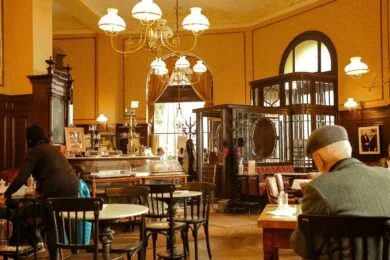
Vienna's coffee houses show off their full charm in winter. When it's freezing outside and inside the air smells of Melange and fresh apple strudel, you understand why Viennese coffee house culture is part of UNESCO's cultural heritage. Café Central and Café Sperl are especially atmospheric in winter.
Winter events:
Christmas markets (mid-November – December 26): more than 20 markets all over the city
Silvesterpfad (December 31): Vienna's New Year's Eve party in the city center, with waltzes, music and fireworks on Stephansplatz
Wiener Eistraum (January–March): ice skating on Rathausplatz
Opera Ball (February): the social highlight of the year
Fasching (February): carnival celebrations and parades, especially for kids
Our tip: The week between Christmas and New Year (December 27–30) is perfect: the Christmas markets are still running, the city is festively lit and many museums have special programs. On December 31, the city center turns into one huge open-air party: the Silvesterpfad (New Year's Eve trail) leads from St. Stephen's Cathedral through the streets of the city center.
The Best Time to Visit at a Glance
Month | Temperature | Highlight | Crowds |
|---|---|---|---|
January | –2 to 3 °C | Eistraum, ball season | Low |
February | –1 to 5 °C | Opera Ball, Fasching | Low |
March | 3 to 10 °C | Easter markets | Medium |
April | 8 to 16 °C | Parks in bloom, Schanigärten open | Medium |
May | 12 to 22 °C | Festwochen, Genussfestival | Medium–High |
June | 16 to 26 °C | Donauinselfest, outdoor pools | High |
July | 18 to 30 °C | Film Festival, open-air events | Very high |
August | 18 to 30 °C | ImPulsTanz, swimming weather | Very high |
September | 13 to 23 °C | Grape harvest, Heurigen, Weinwandertag | Medium |
October | 8 to 16 °C | Viennale, National Day | Medium |
November | 3 to 9 °C | Christmas markets open | Medium |
December | –1 to 5 °C | Christmas markets, New Year's Eve | High |
Our Verdict
There's no wrong season for Vienna. But if we had to choose: September and May are the best months for a combination of pleasant weather, fewer tourists and a rich cultural program. If you're after winter romance, December is your month. And if you want to experience Vienna at its most relaxed and lively, come in June.
Find the right attractions for your season: from Parks, Gardens & Nature to Museums & Exhibitions and Markets, Coffee Houses & Food. You'll find all attractions in Vienna here.