
At first glance, Vienna seems elegant and easy to navigate, and it really is. Still, a few things will make your first visit a lot more enjoyable if you know them in advance. From getting there and the quirks of Viennese cuisine to the typical mistakes almost every first-timer makes, this guide prepares you for everything.
Getting There: How to Reach Vienna
By Plane
Vienna International Airport (Schwechat) lies about 18 kilometers southeast of the city. Here's how to get from there to the city center:
The City Airport Train (CAT) takes you straight to Wien Mitte station in 16 minutes. It's fast and convenient, but at around €15 each way it isn't exactly cheap. The S7 commuter train (S-Bahn) is much cheaper (about 25 minutes, regular public transport ticket). It stops at the same stations and, with an extra zone added to your 24-hour ticket, costs only a fraction of the price.
A taxi to the city center costs a flat rate of about €40; Uber is often a little cheaper.
By Train
Vienna is superbly connected to the European rail network. Vienna Main Station (Wien Hbf) is the central hub and only a few minutes from the city center on the U1. There are direct connections to Munich (4 hours), Budapest (2.5 hours), Prague (4 hours) and Zurich (8 hours), among others. The night train service Nightjet links Vienna overnight with numerous European cities.
By Car
Possible, but not recommended. Parking in the city center is expensive and hard to find, and short-term parking zones apply in most districts. Vienna is much less stressful to explore by public transport anyway. If you do arrive by car, use the park-and-ride facilities on the outskirts.
Getting Around: Public Transport in Vienna
Vienna's public transport network is one of the best in the world, and that's no exaggeration. Five U-Bahn (subway) lines plus countless trams and buses get you everywhere quickly and reliably.
Tickets and Prices
A 24-hour ticket costs €10.20 and the 7-day ticket €28.90 (as of 2026). Since January 1, 2026, 48-hour and 72-hour tickets are no longer available. From the moment you first validate it, the ticket is valid on all U-Bahn lines, trams and buses within Vienna's core zone. Single rides cost €3.20.
You can buy tickets from the machines in every U-Bahn station, in the “WienMobil” app or at Trafiken (tobacco and newspaper kiosks). Some trams also have ticket machines, but they don't always accept cards, so it's better to buy in advance.
Important: There are no barriers or turnstiles. The system is based on trust, but there are regular ticket inspections, and riding without a valid ticket costs €105.
On Foot
Vienna's city center (the 1st district) is surprisingly compact. From St. Stephen's Cathedral to the Hofburg, the former imperial palace, is just a 10-minute walk, and the Naschmarkt is another 15 minutes from there. For most of the sights in the center, you won't need public transport at all.
By Bike
Vienna has a well-developed network of bike lanes. The bike-sharing system WienMobil Rad (formerly Citybike) has stations all over the city. On many plans the first half hour is free, which is ideal for short trips.
Finding Your Way: Understanding Vienna's Districts
Vienna is divided into 23 districts, numbered 1 to 23. The number is also part of the postal code: 1010 = 1st district, 1070 = 7th district, and so on.
1st district (Innere Stadt): The historic center with St. Stephen's Cathedral, the Hofburg, the Graben, the Kohlmarkt and the State Opera. This is where most of the tourist action happens. Compact, walkable, expensive.
2nd district (Leopoldstadt): The Prater, the Karmeliterviertel neighborhood and Danube Island. Lively and increasingly trendy.
3rd district (Landstraße): The Belvedere, the Hundertwasserhaus and quiet residential streets.
4th–9th districts: The districts around the city center, inside the Gürtel ring road. Here restaurants and bars, markets, culture and residential neighborhoods all mix. The 7th district (Neubau) around the MuseumsQuartier is the city's hippest neighborhood.
13th district (Hietzing): Schönbrunn Palace and Schönbrunn Zoo.
The Ringstrasse (the Ring) is the grand boulevard that encircles the 1st district. Along the Ring you'll find the Vienna State Opera, the Austrian Parliament, City Hall (Rathaus), the Burgtheater and several museums. A walk along the Ring is a sight in itself.
Food and Drink: What You Should Know
Viennese Cuisine: The Classics
Viennese cuisine is hearty, rich and not exactly low in calories, and that's exactly what makes it so good.
The Wiener Schnitzel is the national dish: a thin, breaded veal cutlet fried while floating in plenty of fat in the pan and served with lingonberries and potato salad. Note: a genuine Wiener Schnitzel is always made from veal. If pork is used, the correct name is “Schnitzel Wiener Art” (Viennese-style schnitzel), a distinction the Viennese care about.
Other classics you should try: Tafelspitz (boiled beef with apple horseradish), goulash (the Viennese version is thinner than the Hungarian original), Kaiserschmarrn (shredded pancake with stewed plums) and, of course, Sachertorte: chocolate cake with apricot jam and a Viennese must since 1832.
Coffee House Etiquette
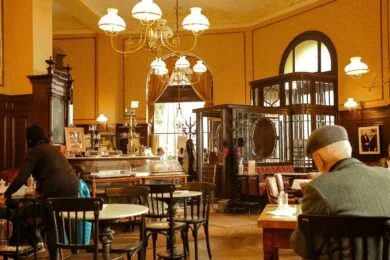
Viennese coffee house culture is part of UNESCO's cultural heritage, and a visit is an absolute must. There are a few things you should know:
You don't order a “coffee.” In Vienna, you order a Melange (Vienna's milky coffee, similar to a cappuccino), a Großer Brauner (a lengthened coffee with milk), a Kleiner Schwarzer (espresso) or an Einspänner (double espresso topped with whipped cream, served in a glass). The menu in every coffee house explains the different variations.
Schlagobers is whipped cream, and in Vienna it goes on almost everything.
In a traditional Viennese coffee house, it's perfectly fine to sit for hours over a single cup, reading the paper or simply watching the world go by. Nobody will pressure you to order more. That's not bad service: that's Viennese culture.
Our recommendations: Café Central for its imperial atmosphere, Café Sperl for the authentic Viennese experience.
Tipping
In restaurants and cafés, a tip of 5–10% is customary. You round up or tell the server the amount you want to pay when you settle the bill. For example, if the bill is €18.50, you say “Zwanzig, bitte” (twenty, please) or “Passt so” (keep the change). Tipping is voluntary, but expected.
In coffee houses, rounding up to the next euro is enough. Setting aside an extra 50 cents to 1 euro for the waiter in a coffee house is appropriate.
Water
Vienna's tap water comes straight from the mountains and is excellent. You can drink it everywhere, and there are public drinking fountains all over the city. In restaurants you're welcome to order tap water; that's completely accepted and free of charge.
Money and Paying
Vienna is in the eurozone, so the currency is the euro (€). You can pay by card in most restaurants, shops and museums, but smaller cafés, market stalls and some traditional restaurants only accept cash. Always carry some cash, especially for markets like the Naschmarkt or the Brunnenmarkt.
ATMs (called Bankomaten) are everywhere. Avoid the currency exchange offices at the airport and in tourist areas, as their rates are considerably worse.
Weather and What to Wear
Vienna has a continental climate with four distinct seasons: hot summers (up to 35 °C), cold winters (down to –5 °C), and everything in between in spring and fall.
Rule of thumb: Dress in layers. Viennese weather can change within a single day: sunshine in the morning, a thunderstorm in the afternoon and clear skies again in the evening. A light umbrella or rain jacket in your backpack makes sense all year round.
Shoes: You'll be walking a lot. Comfortable, broken-in shoes matter more than stylish ones. Cobblestones and uneven paths are everywhere in the old town.
Language and Communication
The official language is German, but almost everywhere in Vienna, especially in hotels, restaurants and tourist facilities, people also speak English. Still, the Viennese appreciate it when you try a few words of German:
Grüß Gott – Hello (the standard greeting in Vienna)
Servus – Bye (informal, among friends)
Bitte / Danke – Please / Thank you
Zahlen bitte – The check, please
Oida – A versatile Viennese expression (astonishment, annoyance, affection, depending on how you say it)
A word about Wiener Schmäh, the famous Viennese humor: the Viennese are known for being direct, sometimes sarcastic, and for their own dry sense of humor. At first that can come across as unfriendly, but it's usually meant affectionately. A grumpy waiter in a coffee house is part of the experience.
Safety
Vienna regularly ranks among the safest major cities in the world. The usual big-city precautions are enough: keep your valuables close to your body, watch out for pickpockets on crowded public transport and use common sense at night. Violent crime against tourists is extremely rare.
The emergency numbers are 112 (European emergency number), 133 (police) and 144 (ambulance).
The 5 Most Common First-Timer Mistakes
1. Planning Too Much
You can't just “tick off” Vienna in a day. Plan fewer sights and take time to enjoy the atmosphere instead. A visit to a coffee house or an aimless stroll is just as much a part of the Vienna experience as the big attractions.
2. Staying Only in the 1st District
The city center is beautiful, but you'll find the real Vienna in the surrounding districts too: the 7th district (Neubau) for boutiques, restaurants and bars, the 2nd district for the Prater and the Karmelitermarkt, and the 4th district for the Naschmarkt and the Freihausviertel scene.
3. Ordering a Pork “Wiener Schnitzel”
In a good Viennese restaurant, the real schnitzel is made from veal. The pork version is cheaper, but it's not the original. Treat yourself to the real thing at least once; you'll taste the difference.
4. Forgetting a Sackerl (Bag) for the Market
At the Naschmarkt and other markets, there often aren't any plastic bags. Bring your own bag: that's common practice in Austria anyway, and it saves money.
5. Missing the Ringstrasse Tram
Skip the expensive sightseeing bus and simply hop on tram line 1 or 2, which run along large parts of the Ringstrasse. With a regular public transport ticket, you'll see the Opera, the Parliament, City Hall, the Burgtheater and the University for the price of a single ride: €3.20.
Your First Day: The Quick-Start Plan
If you're short on time, take a look at our detailed route: Vienna in One Day: The Perfect Route. For a relaxed first day, we recommend:
Morning: St. Stephen's Cathedral → Graben → Hofburg → Volksgarten Lunch: Naschmarkt or a Beisl (traditional Viennese pub) on a side street Afternoon: Schönbrunn Palace and its palace park Evening: Coffee house (Café Central or Café Sperl), then dinner
Useful Apps and Websites
WienMobil – The official app of Wiener Linien (Vienna's public transport) for route planning and tickets
wien.info – The official tourism website with an events calendar
WienCityGuide.com – Your curated guide to attractions and insider tips
Ready for Vienna? Discover all attractions in Vienna or get inspired by our categories, from Palaces & Residences to Viewpoints & Experiences.