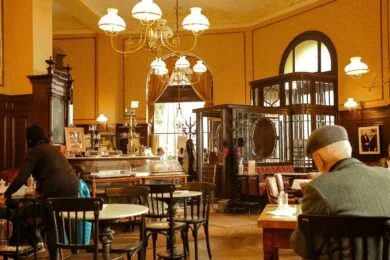

Viennese cuisine is not diet food. It's rich, hearty, generous with the butter and uncompromising in its mission to make you happy. Over the centuries Vienna absorbed culinary influences from across the Habsburg Empire, from Bohemian pastries and Hungarian goulash to Italian touches, and turned them into something of its own. Here are the 12 dishes you absolutely have to try in Vienna, the stories behind them and the best places to eat them.
The Savory Classics
1. Wiener Schnitzel: The National Treasure
No dish is as inseparable from Vienna as the schnitzel. A real Wiener Schnitzel is made from thinly pounded veal, coated in flour, egg and breadcrumbs and fried golden brown in clarified butter. The breading should lift slightly away from the meat and puff up in waves; the Viennese call this “souffliert.” It's traditionally served with lingonberries, a lemon wedge and potato salad or parsley potatoes.
Important: If the menu says “Schnitzel Wiener Art” (Viennese-style schnitzel), it's pork: cheaper, but not the original. In a good Beisl (traditional Viennese pub), expect to pay between €18 and €28 for the real veal schnitzel, and it's worth it.
Where: Figlmüller (Wollzeile / Bäckerstraße) is the city's most famous schnitzel temple, where the schnitzels hang over the edge of the plate. If you want to skip the line, Meixner's Gasthaus (3rd district, Landstraße) and Schnitzelwirt (7th district, Neubau) serve excellent quality without the hype.
2. Tafelspitz: The Emperor's Dish
Tafelspitz is boiled beef at its finest: a cut of tafelspitz (a specific part of the rump) is simmered slowly in an aromatic broth until it's butter-soft. It's served with Apfelkren (horseradish with grated apple), chive sauce and Rösterdäpfel (pan-fried potatoes). The broth often comes first as a starter, with Frittaten (sliced pancake strips) or Grießnockerl (semolina dumplings).
Emperor Franz Joseph is said to have eaten Tafelspitz almost every day. The dish represents the refined side of Viennese cuisine: simple, but demanding to get perfect.
Where: Plachutta (several locations, flagship on Wollzeile) has made Tafelspitz its brand and serves more than a dozen different cuts of boiled beef. If you prefer something more down-to-earth, Gasthaus Pöschl (Weihburggasse, 1st district, Innere Stadt) cooks an excellent Tafelspitz at fair prices.
3. Goulash: The Bohemian-Hungarian Import
Viennese goulash is quite different from the Hungarian original: it's less soupy, thicker and made only with beef, no pork, no lamb. The sauce is based on onions (lots of onions), paprika, caraway and a good splash of vinegar, which gives it its typically Viennese tang. It comes with a Semmel (bread roll) or Nockerl (small dumplings).
Every Viennese Beisl serves goulash, and most Viennese coffee houses have it on the menu too. It's considered the ultimate comfort food.
Where: The Gulaschmuseum (Schulerstraße, 1st district) serves more than 15 different kinds of goulash. At Café Landtmann and Café Sperl you'll get solid coffee-house goulash in a classic atmosphere.
4. Beuschel: For the Brave
Beuschel is a ragout of veal lung and veal heart in a tangy sauce with capers and lemon, served with bread dumplings. It sounds adventurous but tastes surprisingly mild and delicate. Offal is part of Vienna's culinary tradition, and Beuschel is its best-known example.
Where: Gasthaus Rebhuhn (Berggasse, 9th district, Alsergrund), a traditional restaurant that serves offal dishes of a high standard.
5. Sausages from a Stand: Vienna's Fast Food
Würstelstände (sausage stands) are as much a part of Vienna as its coffee houses. These small kiosks, which do most of their business at night, serve Käsekrainer (a sausage with chunks of melted cheese that ooze out hot, so be careful!), Frankfurter (called “Wiener” in Austria; yes, it's confusing), Burenwurst and Bosna (a spicy bratwurst in a baguette with onions and curry spices).
Add a Pfiff of beer (a small glass), mustard and a piece of bread, and you've got Vienna flair at 03:00.
Where: The Bitzinger Würstelstand at the Albertina (next to the Opera) is the most famous: operagoers in evening dress stand next to partygoers in sneakers. Würstelstand LEO on the Danube Canal (Schwedenplatz) is also legendary.
6. Naschmarkt: A Culinary Trip Around the World
The Naschmarkt is less a single dish than a culinary experience. Along more than 500 meters, stalls line up selling spices, olives, cheese, seafood, Turkish sweets, Persian rice and Styrian pumpkin seed oil. In between, people sit in small eateries eating sushi, falafel, lángos or fresh oysters.
Tip: Don't eat at the restaurants right on the market (overpriced); taste your way through the stalls instead. The Saturday flea market at the end of the market is a bonus.
The Sweet Legends
7. Sachertorte: The Chocolate Classic
Sachertorte was invented in 1832 by 16-year-old apprentice cook Franz Sacher and has since been the subject of one of the most famous legal disputes in culinary history: who makes the “original” Sachertorte, Hotel Sacher or the Demel pastry shop? Hotel Sacher won, but both versions are excellent.
A real Sachertorte consists of chocolate sponge cake, a layer of apricot jam and a coating of dark chocolate glaze. It comes with a big dollop of whipped cream (unsweetened). Without the whipped cream, it's only half the experience.
Where: Hotel Sacher (Philharmonikerstraße, behind the Opera) for the official original. Demel (Kohlmarkt) for the alternative version and what may be the most beautiful pastry shop window in the world.
8. Apfelstrudel: Paper-Thin
A good Viennese apple strudel starts with strudel dough stretched so thin you could read a newspaper through it. It's filled with tart apples, raisins (soaked in rum), cinnamon, sugar and breadcrumbs toasted in butter, and served warm with vanilla sauce or whipped cream.
Where: The Strudel Show at Café Residenz in Schönbrunn demonstrates the process live and then serves the strudel fresh. For everyday enjoyment, almost every coffee house has its own apple strudel on the menu.
9. Kaiserschmarrn: The Emperor's Pancake
Kaiserschmarrn is a thick, shredded pancake made from a fluffy batter (with or without raisins, a point the Viennese argue about passionately), dusted with powdered sugar and served with Zwetschkenröster (stewed plums). Depending on which legend you believe, the name goes back to Emperor Franz Joseph, who supposedly liked the dish so much that it was named after him.
Kaiserschmarrn is so filling that in Vienna it also counts as a main course. Never order it as dessert after three courses, unless you have an imperial appetite.
Where: The Kaiserschmarrn at the Tirolergarten (Schönbrunn Palace Park) is legendary. In the city center, Café Diglas serves an excellent version.
10. Palatschinken: Not Just Pancakes
Palatschinken are thin, crêpe-like pancakes that the Viennese fill with all sorts of things: apricot jam (the classic), Topfen (a fresh curd cheese similar to quark), chocolate, nuts, or savory fillings like spinach and cheese. In the upscale version, they're flambéed.
Where: In every Beisl and coffee house. Especially good: Palatschinkenpfandl near the Naschmarkt, a small place that specializes entirely in Palatschinken.
11. Marillenknödel: A Summer Classic
When Austrian Marillen (apricots) are in season in July and August, Marillenknödel (apricot dumplings) appear on menus all over Vienna: whole apricots wrapped in Topfen or potato dough, rolled in butter and breadcrumbs and sprinkled with powdered sugar. A seasonal dish you shouldn't miss.
Where: Glacis Beisl (next to the MuseumsQuartier) serves excellent Marillenknödel in summer in a relaxed garden setting.
12. Punschkrapfen: Pink and Dangerous
The Punschkrapfen is Vienna's most colorful pastry: a small, bright pink cube of sponge cake soaked in rum punch and covered in pink fondant. It tastes sweet, fruity and distinctly boozy, a piece of Austrian pâtisserie you'll only find here.
Where: Konditorei Oberlaa (several locations) and any good Viennese bakery. At the Naschmarkt you can buy them individually to try.
Where Locals Really Eat: The Viennese Beisl
Forget the tourist restaurants right next to the sights. If you want to eat like a local, go to a Beisl: Vienna's version of the pub, just with much better food. You can spot a good Beisl by its handwritten daily menu, wood paneling, a regulars' table in the corner and portions that leave no questions unanswered.
Our Beisl recommendations:
Zum Alten Fassl (Zieglergasse, 5th district, Margareten): classic Viennese cooking, huge schnitzels, fair prices. Popular with locals.
Silberwirt (Schlossgasse, 5th district): upscale Beisl cooking with a seasonal menu and one of the loveliest beer gardens in town.
Gasthaus Pöschl (Weihburggasse, 1st district): right in the city center, yet authentic. Tafelspitz and Beuschel of a high standard.
Steman (Otto-Bauer-Gasse, 6th district, Mariahilf): unchanged since 1920. Set lunch menu under €12, honest cooking, Viennese atmosphere without a filter.
Edible Souvenirs: What to Take Home
Pumpkin seed oil: You'll find this dark green, nutty oil from Styria at the Naschmarkt. It's perfect on salads and a gift nobody expects.
Manner wafers: The pink-wrapped wafers with hazelnut cream are Vienna's most popular souvenir. You can get them in any supermarket, but the Manner store on Stephansplatz has flavors you won't find anywhere else.
Mozartkugeln: Yes, they actually come from Salzburg, but Vienna has its own versions. The handmade ones are much better than the factory-made ones.
Sachertorte: Hotel Sacher ships the cake in an elegant wooden box. Not cheap, but a perfect gift.
You'll find more culinary experiences in our category Markets, Coffee Houses & Food. Discover the Naschmarkt and Café Central, or browse all attractions in Vienna.