
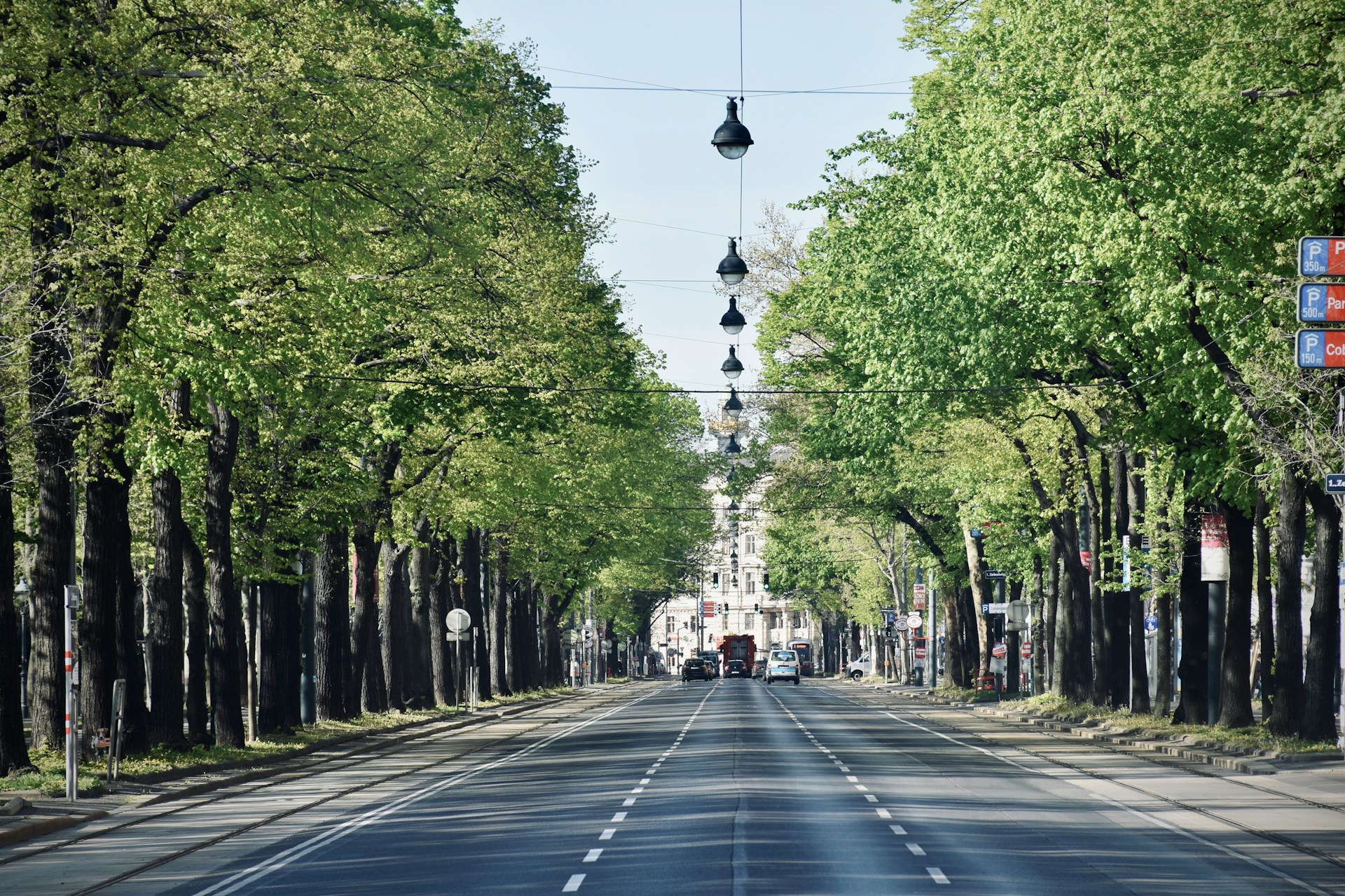
Ringstrasse
Vienna's Ringstrasse (the Ring) was built in the 19th century on the orders of Emperor Franz Joseph, as a symbol of the modern, up-and-coming Vienna of the Gründerzeit, the city's great boom years. Between 1857 and the 1890s, a unique ensemble of grand buildings in the historicist style took shape here. Where the medieval city wall once ran, the boulevard, about 5.3 km long, now circles the Innere Stadt.
Like hardly any other street in the world, the Ringstrasse brings together political, cultural and architectural landmarks: from the Neo-Gothic City Hall (Rathaus) and the Austrian Parliament in Greek classical style to the imposing Vienna State Opera, the buildings bear witness to the self-confidence of a flourishing great power. The Burgtheater, the University of Vienna, the Hofburg, the former imperial palace, the Kunsthistorisches Museum (Museum of Fine Arts) and the Natural History Museum Vienna also border directly on the Ringstrasse. The buildings were designed by the most important architects of the time and are sights in their own right today.
A walk along the Ringstrasse is an architectural journey through many styles and eras. An evening walk, when the facades are lit up, is especially rewarding. Alternatively, you can take the Vienna Ring Tram, which circles the main sights in about 25 minutes. If you'd like to learn more, you can book guided tours that bring the historical and political background to life. Insider tip: the Burggarten next to the Hofburg or the Volksgarten are great places for a short break halfway around.

Highlights

  • - Historicist architecture along 5.3 km
  • - Vienna State Opera, City Hall, museums & Parliament
  • - Rides on the Vienna Ring Tram

Facilities

  • wheelchair accessible
  • kid-friendly
  • Dogs allowed on a leash
  • Photography allowed
  • central location

Map

FAQs

Highlights are Vienna City Hall, the Parliament, the State Opera, the Burgtheater and the famous museums. The adjoining parks are also worth a look.

The Ringstrasse itself is public and free to walk along. Admission to the individual institutions along the street varies.

The Ringstrasse is central and easy to reach by U-Bahn (e.g. U2, U3), tram (lines 1, 2, D) and bus. The Vienna Ring Tram also offers a dedicated sightseeing loop.

An evening walk is especially atmospheric. If you want to learn more, take the Vienna Ring Tram or a guided architecture walk.

A walk takes about 1.5 to 2 hours, depending on how many stops you make. Allow more time for museum visits or guided tours.

More photos

No additional photos available.

Nearby

Places nearby, sorted by distance from Ringstrasse.

Kunsthistorisches Museum Vienna 150 m

Kunsthistorisches Museum Vienna

Maria-Theresien-Platz, 1010 Vienna

  • €22
  • Museums & Exhibitions
Natural History Museum Vienna 160 m

Natural History Museum Vienna

Maria-Theresien-Platz, 1010 Vienna

  • €18
  • Museums & Exhibitions
Heldenplatz 160 m

Heldenplatz

Heldenplatz 21/4, 1010 Vienna

  • Free admission
  • Squares, Streets & Neighborhoods
Hofburg Vienna 210 m

Hofburg Vienna

Heldenplatz, 1010 Vienna

  • €20
  • Palaces & Residences
Maria-Theresien-Platz 310 m

Maria-Theresien-Platz

Maria-Theresien-Platz, 1010 Vienna

  • Free admission
  • Squares, Streets & Neighborhoods

Further reading

Blog posts related to this place.

Christmas Markets in Vienna 2026: Dates, Opening Hours and Which Market Suits You

More than 30 markets, and they're less alike than you might think. Here are the dates for 2026, and which market suits y...

The 1st District on Foot: A Walking Tour of Vienna's Old Town

The 1st district is smaller than most people expect: from St. Stephen's Cathedral to the State Opera is a seven-minute w...

Public Transport in Vienna: Tickets, 2026 Prices and How to Get Around

Five U-Bahn lines, nearly 30 tram lines and hardly ever more than five minutes' wait. Where visitors regularly go wrong...